
Blog

Accessibility Litigation Prevention: The Rules for Commercial Buildings that Predate the ADA

The Americans with Disabilities Act went into effect in 1992 and covers a variety of building types. We’ve heard the assumption that buildings constructed prior to the law are exempt, but that’s not always the case. Here is what you need to know if litigation arises.

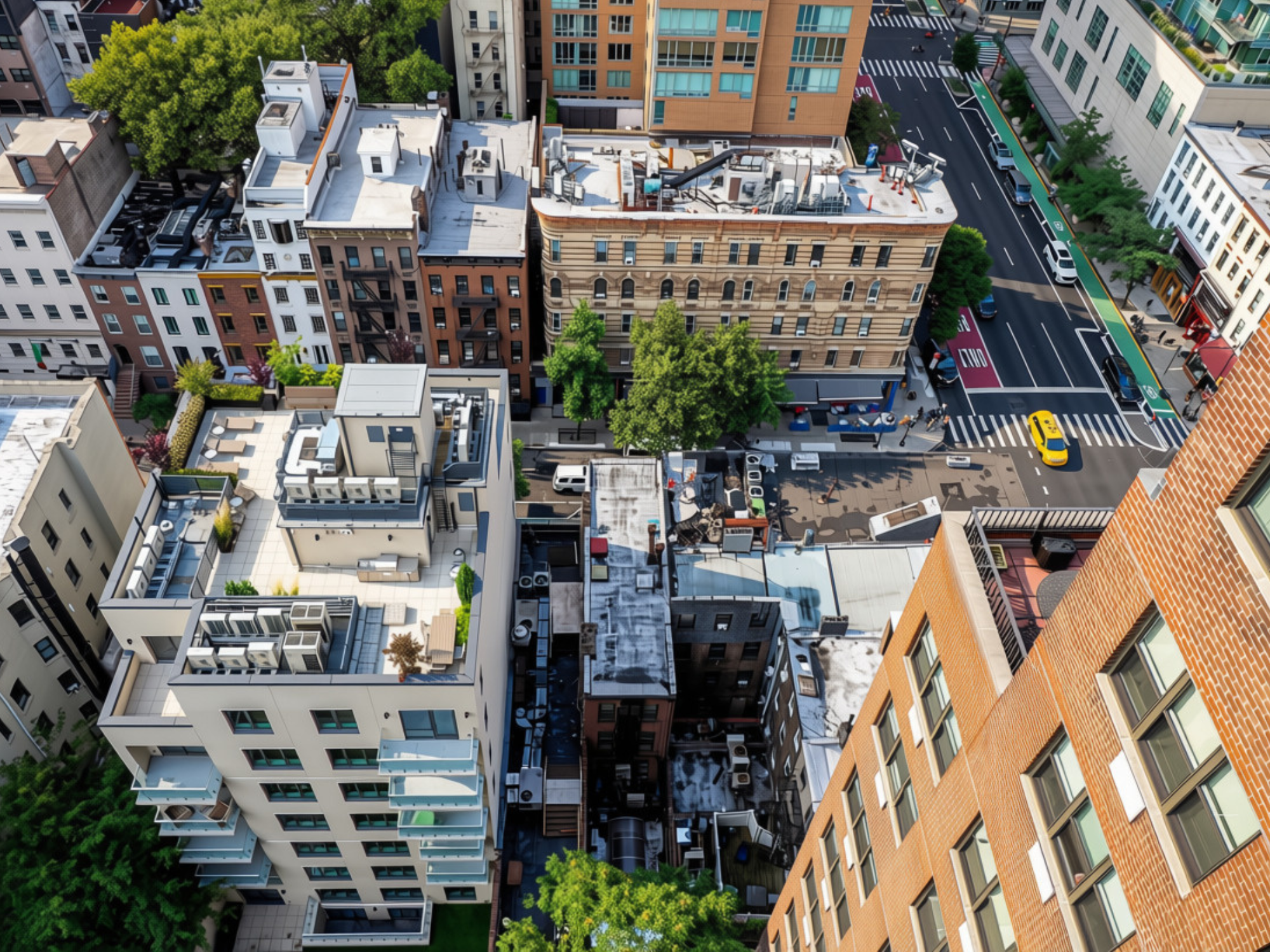
Cobblestone street lined with historic commercial buildings in the SoHo neighborhood of Manhattan, New York City

Places of public accommodation and commercial facilities built or renovated after the Americans with Disabilities Act (ADA) went into effect in January 1992 must comply with the law.  But does that mean buildings that existed prior to this date are exempt from the ADA and protected from litigation?

No, many of them are not.

The ADA’s new construction requirements do not apply retroactively to facilities built before the law took effect. However, places of public accommodation have an ongoing obligation to remove barriers to access where readily achievable, regardless of when they were built.

Understanding what this requirement means in practice is essential for reducing the risk of accessibility litigation and making informed decisions.

This blog post is part of our ongoing effort to share the real‑world misunderstandings that can lead to accessibility litigation.

SWA’s Peter Stratton, Managing Director of Accessibility Services, has served as an expert witness in numerous accessibility litigation cases. Through that work, he has seen how design decisions are scrutinized and how misinterpretations of accessibility requirements can become central issues in a case.

In part one, Peter covered ways to reduce litigation risk for residential new construction projects.

For part two, in recognition of the 36th anniversary of the ADA on July 26, Peter is explaining the “readily achievable barrier removal” requirement and the types of allegations that commonly arise in litigation involving older properties.

What Buildings Are Covered by the ADA?

According to Title III of the ADA, the law covers places of public accommodation and commercial facilities defined by the regulations as having operations that affect commerce.

Broadly, a place of public accommodation is privately owned, open to the public, and falls into one of 12 categories established by the ADA. The 12 categories are exhaustive; the associated examples are not. They include: 

  1. Places of lodging (e.g., inns, hotels, motels), except for owner-occupied establishments renting fewer than six rooms
  2. Establishments serving food or drink (e.g., restaurants and bars)
  3. Places of exhibition or entertainment (e.g., motion picture houses, theaters, concert halls, stadiums)
  4. Places of public gathering (e.g., auditoriums, convention centers, lecture halls)
  5. Sales or rental establishments (e.g., bakeries, grocery stores, hardware stores, shopping centers)
  6. Service establishments (e.g., laundromats, dry-cleaners, banks, barber shops, beauty shops, travel services, shoe repair services, funeral parlors, gas stations, offices of accountants or lawyers, pharmacies, insurance offices, professional offices of health care providers, hospitals)
  7. Public transportation terminals, depots, or stations (not including facilities relating to air transportation)
  8. Places of public display or collection (e.g., museums, libraries, galleries)
  9. Places of recreation (e.g., parks, zoos, amusement parks)
  10. Places of education (e.g., nursery schools, elementary, secondary, undergraduate, or postgraduate private schools)
  11. Social service center establishments (e.g., day care centers, senior citizen centers, homeless shelters, food banks, adoption agencies)
  12. Places of exercise or recreation (e.g., gymnasiums, health spas, bowling alleys, golf courses)

A commercial facility subject to Title III is privately owned, not open to the general public, and not subject to predetermined categories. These facilities include offices, factories, warehouses, etc.

What Are the Requirements for Buildings That Predate the ADA?

The ADA became effective in January 1992. As of that date, new construction and alterations of facilities subject to Title III must comply with the ADA and its referenced technical standard.

However, there are also requirements that apply to some Title III facilities that predate the ADA.

Places of public accommodation have an ongoing requirement under the ADA to remove physical barriers to access where readily achievable. This obligation is commonly referred to as “readily achievable barrier removal.”

Interestingly, Title III commercial facilities are not subject to the requirement for readily achievable barrier removal.

Because of this, SWA’s litigation work related to facilities that predate the ADA is limited to places of public accommodation, e.g., hotels, retail, fitness centers, etc.  

What Are Common Accessibility Litigation Claims Involving Buildings That Predate the ADA?

Common among cases alleging noncompliance with the ADA in places of public accommodation that predate the ADA include claims of:

  • inaccessible entrances due to the presence of stairs
  • lack of accessible routes throughout facilities
  • lack of accessible dining tables and bars in restaurants
  • inaccessible bathrooms
  • multilevel inaccessible spaces

… and the like.

A common source of confusion in accessibility litigation is that legal complaints often allege noncompliance with new construction requirements, despite the facility predating the ADA.

Building owners often think that because legal filings and case documents cite noncompliance with new construction requirements, their building is subject to those requirements, when that is not the case.

For public accommodations that predate the ADA, the key legal question is not if the entire facility complies with new construction standards, but if barrier removal is readily achievable.

How Do Owners of Buildings Predating the ADA Avoid Litigation?

Physical barriers to access that exist in places of public accommodation that predate the ADA must be removed, but only if doing so is readily achievable, i.e., easily accomplishable without much difficulty or expense.

For example, in a facility that predates the ADA, if installing a ramp to provide access to the entrance is easy to accomplish without much expense, then it must be done. But, where it is determined that removing a barrier to access, such as steps at a building entrance, is not readily achievable, then an alternative method that is readily achievable to provide is required.

If installing a ramped entrance to an existing facility is not readily achievable due to the narrowness of the adjacent public sidewalk, for example, then an alternative method of providing access must be considered.

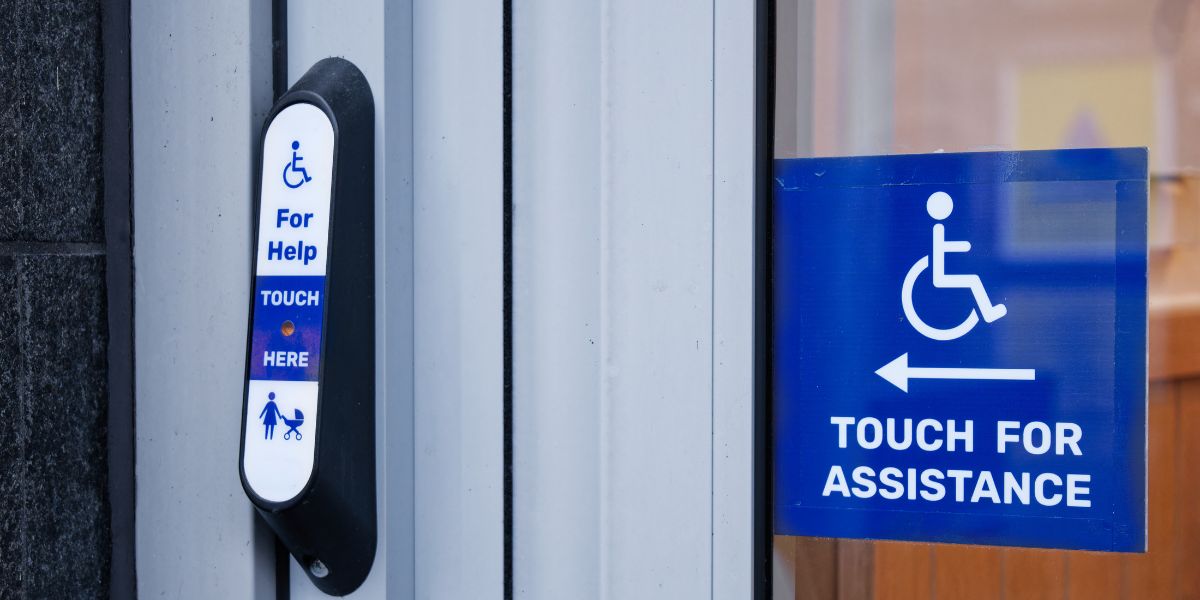
In this case, an alternative method of providing access might be a portable ramp placed at the entrance when needed, along with the installation of a buzzer at the entrance for someone to ring to notify employees that access is being requested.

Accessibility assistance button mounted beside a building entrance door, next to a sign with the International Symbol of Access and the words "Touch for Assistance."
Accessibility assistance button mounted beside a building entrance door

Let’s look at another common litigation claim: inaccessible bathrooms.

It’s typical for a complaint to allege that a restaurant has a noncompliant bathroom located on an inaccessible upper or lower floor.

However, too often complaints and allegations fail to consider whether it’s readily achievable to provide an accessible bathroom.

In many cases, it’s not possible to connect a bathroom with an accessible route from the dining area for any number of reasons.

That said, despite an accessible route not being readily achievable to provide, barriers that exist inside the bathroom must be corrected to the extent they can be. Adding grab bars, removing the base cabinet below a sink, and lowering the mirror above the vanity are all methods of removing barriers to access.

What to Do If You’re Facing Accessibility Litigation

Understanding how the ADA applies to facilities constructed before the law was enacted is one of the most effective ways for owners to avoid accessibility litigation.

If litigation does occur, working with an expert who understands both accessibility requirements and the legal process can help identify legitimate allegations and how to address them.

When we support clients during accessibility litigation, our role typically includes:

  • Inspections and documentation: Evaluating existing conditions; identifying areas of noncompliance; and preparing clear, defensible reports
  • Remediation guidance: Advising on practical and compliant corrective measures
  • Expert support: Serving in an advisory or expert witness capacity throughout the litigation process

We also regularly share guidance on accessible design, compliance, and risk reduction here on our blog throughout the year.

You can reach our Accessibility Team anytime by filling out our contact form.

Author: Peter A. Stratton, Managing Director of Accessibility Services at SWA